Overview
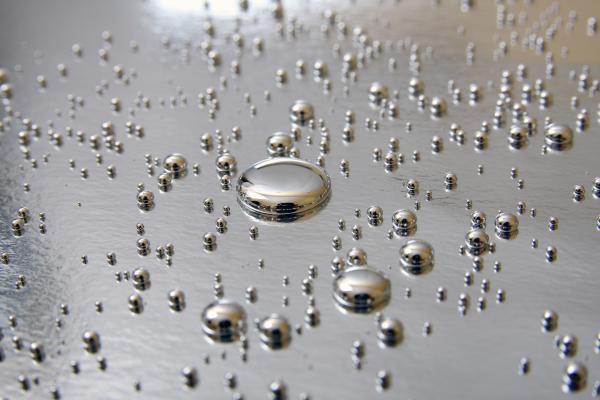
Mercury is a chemical that is highly toxic to humans and the environment. When it is released into the environment, it enters the food chain where it accumulates mainly in fish. Exposure to high levels of mercury can cause harm to the brain, lungs, kidneys and immune system.
Over the past twenty years the EU has developed a comprehensive body of legislation covering all aspects of the mercury lifecycle, from primary mining to waste disposal. This includes measures on trade, products containing mercury and mercury pollution.
The EU banned mercury-containing batteries, thermometers, barometers and blood pressure monitors. Mercury is also no longer allowed in most switches and relays found in electronic equipment. Energy-efficient lamps using mercury technology are only permitted on the market with a reduced mercury content. It is prohibited to use dental amalgam on vulnerable patients. In July 2023 the Commission proposed a revision to the current rules to further restrict the remaining uses of mercury in the EU.
Objectives
EU law aims to ensure a high level of protection of human health and the environment from mercury, in line with the objectives of the European Green Deal, the EU Chemicals Strategy on Sustainability and the Zero Pollution Action Plan.
Law
Regulation (EU) 2017/852 covers the full life cycle of mercury. It complements a large body of existing EU environmental law on mercury, by inter alia
- prohibiting the export of mercury and mercury compounds as well as the manufacture, export and import of a large range of mercury-added products (MAPs)
- prohibiting the use of mercury or mercury compounds as catalysts and electrodes in industrial processes
- taking measures to reduce the use of dental amalgams, the largest remaining intentional use of mercury in the EU, by assessing the feasibility of a complete dental amalgam phase-out in dentistry by 2030 (see also final report)
- prohibiting new uses of mercury in industry and in products except when significant environmental or health benefits are demonstrated and no mercury-free alternatives delivering such benefits are available
- ensuring that mercury waste is managed without endangering human health or harming the environment
The Commission has adopted the following Implementing Acts
- Commission Decision on forms to be used in relation to the import of mercury
- An Inventory of mercury-added products and manufacturing processes using mercury or mercury compounds is available in accordance with Art 8(7) of the Regulation
- Implementing Decision establishing questionnaires, as well as the format and frequency of reports to be prepared by the Member States in accordance with Regulation (EU) 2017/852
In July 2023 the Commission adopted the Delegated Regulation transposing the Minamata Convention into EU law, which introduces a prohibition against the manufacture import and export of eight additional mercury containing products, including mercury-containing lamps and non-electrical equipment.
Other laws
- Storage of mercury and mercury compounds: Both the SEVESO Directive and Industrial Emissions Directive (IED) lay down requirements aiming at ensuring the environmentally-sound storage of metallic mercury and of mercury compounds.
- Mercury-added products: The mercury content, the placing on the market and the import into the EU of a wide range of mercury-added products (e.g. batteries, electrical and electronic equipment, thermometers,) is regulated in the Battery and the RoHS (switches, relays, lamps) Directives as well as the REACH and cosmetic products Regulations.
- Manufacturing processes: Mercury emissions from major industrial sources are regulated under the Industrial Emissions Directive (IED) which requires installations to operate on the basis of a permit and to apply the best available techniques (BAT) including the production of chlor-alkali, which was the most important manufacturing process using mercury and was banned by Commission Implementing Decision 2013/732.
- Mercury emissions and releases to air, water and soil: These are regulated by the Industrial Emissions Directive (IED) in combination with the Water Framework Directive and with the Surface Water Directive that establishes maximum concentration levels of mercury into surface water bodies, sediment and biota.
- Mercury waste management: Metallic mercury as waste and waste containing or contaminated with mercury qualify in most cases as 'hazardous waste' under the Waste Framework Directive. In parallel, the Landfill Directive sets specific requirements for the storage of mercury waste.
Previously, the EU adopted a Mercury Strategy in 2005 and was revised in 2010.
2023 Revision
On 14 July 2023, the Commission proposed a revision to target the last intentional remaining uses of mercury in a variety of products in the EU, in line with commitments set out in the EU’s Zero Pollution Ambition. The revision set out rules to
- phase out the use of dental amalgam from 1 January 2025 in light of viable mercury-free alternatives, thereby reducing human exposure and environmental burden
- prohibit the manufacture and export of dental amalgam from the EU from 1 January 2025
- prohibit the manufacture and export of six additional mercury containing lamps from 1 January 2026 and 1 January 2028 (depending on the lamps type).
See the results of the public consultation and find out more about the revision.
International action
Given the transboundary nature of mercury pollution, the international community took action under the Minamata Convention. It is a global treaty to protect the human health and the environment from anthropogenic emissions and releases of mercury and mercury compounds. The Convention was signed in 2013 and ratified by the EU in 2017.
The Commission adopted two legislative proposals in 2016 to enable EU to ratify the Convention
- Regulation on Mercury repealing and replacing Regulation (EC) 1102/2008
- Council Decision concerning the conclusion on behalf of the EU of the Minamata Convention on Mercury.
- Impact Assesment Report
- Impact Assesment – Summary
For more information on the ratification, see the press release and questions and answers.
Committee and expert group
The Commission regularly convenes meetings of the Mercury Regulation Committee and of the Mercury Expert Group that gather governmental experts to work on implementation of the Regulation. All documents concerning the meetings of both groups are publicly available.
Reports and studies
- Compilation of information on sites potentially contaminated with mercury or mercury compounds
- Report on the reviews required under Article 19 (1) of Regulation 2017/852 on the use of mercury in dental amalgam and products
- Report - tackling mercury pollution in the EU and worldwide, which summarises knowledge on mercury
- Factsheet - EU rules on mercury in action